
What is digital literacy: skills for success in 2026

Think digital literacy just means knowing how to use a computer? That’s where many learners get stuck. Digital literacy actually extends far beyond technical skills, encompassing critical thinking, ethical awareness, and effective communication in digital spaces. For students and lifelong learners aiming to excel academically and professionally, understanding this broader definition is essential. This guide unpacks what digital literacy truly is and provides practical steps to develop it for tangible academic and career benefits.
Table of Contents
- Understanding Digital Literacy: Definition And Core Components
- Why Digital Literacy Matters: Academic And Career Impacts
- Common Misconceptions About Digital Literacy
- Frameworks And Models For Understanding Digital Literacy
- Practical Steps To Develop And Enhance Digital Literacy Skills
- Digital Literacy Vs. Digital Skills: Clarifying The Difference
- Bridging Digital Literacy To Lifelong Learning And Career Advancement
- Explore Personalized Tactics And Strategies To Boost Your Learning And Career
- Frequently Asked Questions
Key takeaways
| Point | Details |
|---|---|
| Digital literacy is comprehensive | It covers critical thinking, ethical awareness, communication, and content creation, not just technical operations. |
| Measurable academic and career impact | Students with strong digital literacy improve performance by up to 30%, and employers highly value these competencies. |
| Misconceptions create learning gaps | Clarifying the difference between digital literacy and digital skills is crucial for effective development. |
| Frameworks guide structured learning | Tools like the European Digital Competence Framework organize skills into manageable areas for targeted growth. |
| Practical application drives success | Regular practice in information evaluation, ethical use, and continuous learning leads to academic and professional advancement. |
Understanding digital literacy: definition and core components
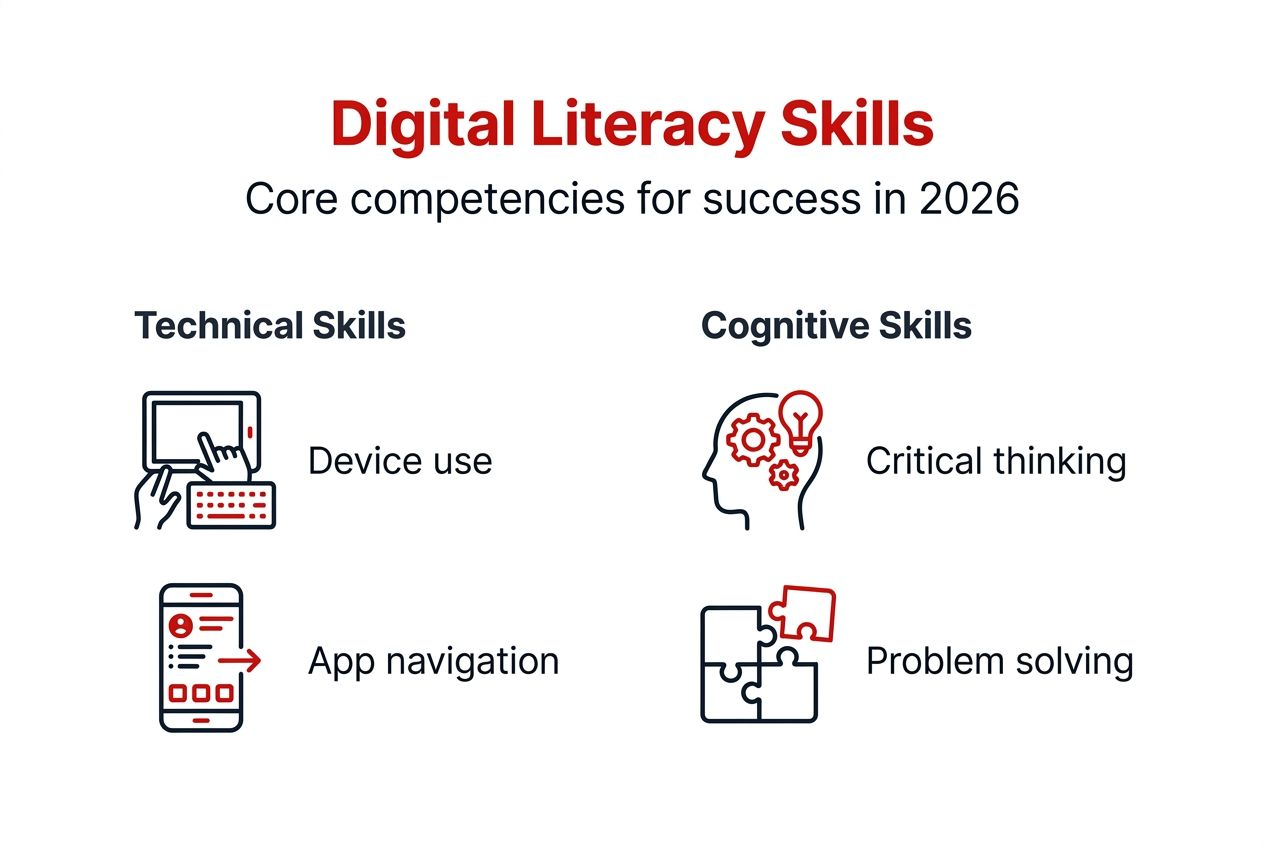
Digital literacy is a multifaceted competency that combines technical, cognitive, and social skills. Unlike basic digital skills that focus on operating devices or software, digital literacy includes multiple competencies that enable you to navigate, evaluate, and create in digital environments effectively.
UNESCO defines five core competencies that form the foundation of digital literacy. These include information literacy, communication and collaboration, digital content creation, safety awareness, and problem-solving. Each competency builds on the others to create a comprehensive skill set that goes beyond just clicking buttons or typing documents.
Critical thinking stands at the heart of digital literacy. When you encounter information online, you need to assess credibility, identify bias, and distinguish fact from opinion. This cognitive skill separates digitally literate individuals from those who merely operate technology. Similarly, effective digital communication requires understanding context, tone, and appropriate platforms for different messages.
Being digitally literate means grasping the ethical dimensions of technology use. You consider privacy implications, respect intellectual property, and recognize how your digital presence impacts your reputation and opportunities. These elements work together to create true digital competence.
The key components of digital literacy include:
- Information and data literacy for locating, evaluating, and managing digital information
- Communication and collaboration skills for effective interaction across digital platforms
- Digital content creation abilities for producing and editing multimedia content
- Safety awareness covering security, privacy, and wellbeing in digital spaces
- Problem-solving capabilities for addressing technical issues and identifying digital solutions
Why digital literacy matters: academic and career impacts
Digital literacy directly influences your academic success. Research shows that students with higher digital literacy improve academic performance by up to 30%. This improvement stems from better research skills, more effective collaboration, and enhanced ability to evaluate sources critically. When you can quickly find reliable information, verify its accuracy, and synthesize it effectively, your assignments and projects naturally improve.
Employers consistently rank digital literacy among their top desired skills. In 2026, nearly every profession requires some level of digital competency, from basic email communication to advanced data analysis. Companies seek employees who can adapt to new technologies, communicate effectively across digital channels, and solve problems using digital tools. Your digital literacy becomes a competitive advantage in job markets.

The educational trends of 2026 highlight how technology integration continues to accelerate across all learning environments. Students who develop strong digital literacy adapt more easily to new learning platforms, participate more confidently in online discussions, and leverage technology for deeper understanding. This adaptability extends beyond graduation into lifelong learning contexts.
Key reasons digital literacy matters:
- Enhances research quality and information verification skills
- Improves collaboration and communication in academic and professional settings
- Supports continuous learning and adaptation to evolving technologies
- Increases employability and career advancement opportunities
- Builds confidence and engagement in technology-driven environments
Common misconceptions about digital literacy
Many people mistakenly believe that digital literacy equals technical prowess. You might assume that if someone can code or troubleshoot hardware issues, they’re digitally literate. This oversimplification misses the critical thinking and ethical components that define true digital literacy. Technical ability without evaluation skills leaves you vulnerable to misinformation and poor digital decisions.
Another widespread misconception suggests that younger generations automatically possess digital literacy because they grew up with technology. Being comfortable with smartphones doesn’t mean you can evaluate source credibility or understand privacy implications. Digital natives often lack the critical analysis skills necessary for informed digital citizenship, requiring structured learning just like anyone else.
Some learners confuse digital literacy with digital skills, viewing them as interchangeable terms. Digital skills focus on operational tasks like using spreadsheet formulas or editing photos. Digital literacy encompasses these skills but adds layers of judgment, ethics, and strategic thinking. This distinction matters because it shapes how you approach learning and which gaps you prioritize filling.
Pro Tip: Test your digital literacy by evaluating three news articles on the same topic from different sources. Can you identify bias, verify facts, and determine which source is most reliable? If this feels challenging, focus on developing critical evaluation skills alongside technical abilities.
Correcting these misconceptions enables more effective skill development. When you understand that digital literacy requires deliberate practice in critical thinking and ethical awareness, you can target your learning efforts more precisely. This clarity prevents wasted time on technical skills alone while neglecting the cognitive abilities that make those skills truly valuable.
Frameworks and models for understanding digital literacy
Structured frameworks provide clarity in the complex landscape of digital literacy. The European Digital Competence Framework categorizes digital literacy into five broad competency areas: information and data literacy, communication and collaboration, digital content creation, safety, and problem-solving. Each area breaks down into specific skills with proficiency levels from foundation to highly specialized.
These frameworks serve as roadmaps for your learning journey. Instead of feeling overwhelmed by the breadth of digital literacy, you can focus on specific competency areas. For instance, if you struggle with evaluating online information, you target the information and data literacy component. This focused approach makes skill development manageable and measurable.
The table below outlines the core competency areas and their practical applications:
| Competency Area | Key Skills | Practical Application |
|---|---|---|
| Information and Data Literacy | Browsing, searching, filtering, evaluating, managing data | Research projects, fact-checking, organizing digital files |
| Communication and Collaboration | Interacting, sharing, engaging, collaborating, netiquette | Group projects, professional networking, online discussions |
| Digital Content Creation | Developing content, integrating information, copyright awareness | Presentations, reports, multimedia projects |
| Safety | Protecting devices, personal data, health, environment | Cybersecurity practices, privacy settings, digital wellbeing |
| Problem-Solving | Technical problem-solving, identifying needs, using technology creatively | Troubleshooting, finding tech solutions, adapting tools |
Other models complement the DigComp framework with similar skill domains. Organizations and educational institutions adapt these frameworks to create assessments and learning pathways tailored to specific contexts. Using these structured approaches increases your learning efficiency and helps you track progress systematically.
Practical steps to develop and enhance digital literacy skills
Start with targeted training that focuses on evaluating information credibility. Practice using fact-checking websites, verifying sources, and identifying common misinformation patterns. Spend 15 minutes daily analyzing articles or social media posts for bias, accuracy, and reliability. This regular practice builds critical evaluation habits that transfer across all digital contexts.
Engage with digital content creation regularly. Whether you’re writing blog posts, creating presentations, or editing videos, hands-on practice develops competency faster than passive consumption. Start simple with basic tools and gradually tackle more complex projects. Each creation reinforces technical skills while building confidence in expressing ideas digitally.
Research shows that integration of ethical considerations increases engagement by 20% in digital literacy programs. Incorporate privacy awareness and ethical decision-making into your learning process. Before posting content or sharing information, pause to consider implications for yourself and others. This reflective practice becomes automatic with repetition.
Follow these actionable steps to strengthen your digital literacy:
- Enroll in structured programs that emphasize both technical and critical thinking skills
- Practice evaluating three different sources daily for credibility and bias
- Create digital content weekly using various tools and platforms
- Learn about digital privacy settings and implement them across your accounts
- Participate in online communities while practicing effective digital communication
- Take advantage of personalized learning tactics tailored to your skill level
- Apply technology in self-improvement routines for continuous growth
Pro Tip: Create a digital literacy journal where you document new skills learned, challenges faced, and solutions discovered. Review it monthly to track progress and identify areas needing more attention.
Additional resources for developing digital literacy include exploring strategies for succeeding as a remote learner and understanding how student mental health support connects to effective digital learning environments. These comprehensive approaches ensure you develop well-rounded digital competencies.
Digital literacy vs. digital skills: clarifying the difference
Digital skills represent the operational abilities required to use technology effectively. These include typing proficiency, navigating software interfaces, using search engines, and troubleshooting basic technical problems. You can measure digital skills through task completion, such as formatting a document or creating a spreadsheet formula. These abilities form the foundation but don’t constitute the complete picture.
Digital literacy encompasses digital skills while adding critical layers of analysis, evaluation, and ethical consideration. When you possess digital literacy, you not only know how to search online but also can evaluate which results are trustworthy. You don’t just post on social media but understand the implications of your digital footprint. This comprehensive competency includes judgment and responsibility alongside technical execution.
The distinction matters for your development strategy. Focusing solely on digital skills leaves gaps in your ability to navigate complex digital environments safely and effectively. You might excel at using software but struggle to identify phishing attempts or evaluate source credibility. Balanced development requires attention to both operational abilities and higher-order thinking skills.
| Aspect | Digital Skills | Digital Literacy |
|---|---|---|
| Focus | Operational tasks and tool use | Critical thinking and ethical application |
| Example | Using word processing software | Evaluating online information credibility |
| Scope | Technical execution | Comprehensive digital competence |
| Development | Task-based training | Critical thinking and ethical practice |
| Application | Completing specific operations | Making informed digital decisions |
Understanding this difference enables accurate self-assessment. You can identify whether you need more technical training or if developing critical evaluation skills should be your priority. Most learners benefit from simultaneous development in both areas, ensuring technical proficiency supports informed decision-making.
Bridging digital literacy to lifelong learning and career advancement
Digital literacy provides the foundation for continuous adaptation in rapidly evolving technological landscapes. As new platforms, tools, and digital practices emerge, your ability to learn and adapt becomes more valuable than mastery of any single technology. This adaptability stems from strong digital literacy that includes learning strategies, critical evaluation, and willingness to experiment with new tools.
Employers increasingly prioritize candidates who demonstrate robust digital literacy for roles at all levels. Beyond entry requirements, digital literacy supports career advancement by enabling you to leverage technology for innovation and problem-solving. Whether you’re analyzing data, collaborating across time zones, or presenting ideas digitally, these competencies distinguish high performers from average employees.
The connection between digital literacy and career development in tech extends beyond technical roles. Marketing professionals need digital literacy for analytics and social media strategy. Healthcare workers require it for electronic health records and telehealth. Educators depend on it for engaging students effectively. Every sector now demands some level of digital competency.
Key ways digital literacy supports lifelong learning and career growth:
- Enables quick adaptation to new technologies and platforms in your field
- Supports continuous professional development through online learning resources
- Enhances problem-solving capabilities using digital tools and data
- Improves communication effectiveness across diverse digital channels
- Builds credibility and professionalism through appropriate digital presence
Investing in digital literacy pays long-term dividends. As you develop these skills, you become more valuable to employers, more effective in academic pursuits, and better equipped to navigate an increasingly digital world. The career value of soft skills combines with digital competencies to create a powerful professional profile. Whether you’re planning a career pivot in tech or advancing in your current field, digital literacy serves as a critical enabler.
Explore personalized tactics and strategies to boost your learning and career
Now that you understand digital literacy’s importance and how to develop it, take the next step by exploring resources designed for your success. Tech Moths offers personalized learning strategies tailored to diverse student needs, helping you apply digital literacy concepts effectively in your unique learning context.
Your career advancement depends on integrating digital skills into technology-driven industries. Discover career development steps that focus on building the digital competencies employers seek. These resources provide practical guidance for translating your growing digital literacy into professional opportunities and sustained career growth.
Inclusive education access programs support lifelong learners at every stage. Explore education access initiatives that help you continue developing digital literacy regardless of your starting point. Leverage these comprehensive resources to solidify your skills and achieve your academic and career goals.
Frequently asked questions
What is digital literacy?
Digital literacy is the comprehensive ability to find, evaluate, create, and communicate information using digital technologies. It combines technical skills with critical thinking, ethical awareness, and effective communication. Unlike basic computer skills, digital literacy includes understanding context, evaluating credibility, and using technology responsibly for academic and professional success.
How can students improve their digital literacy skills?
Engage in structured training focused on information evaluation and ethical digital use. Practice regularly with digital content creation and communication tools across various platforms. Dedicate time daily to analyzing online information for credibility and bias. Explore learning tactics for students that provide personalized approaches to skill development.
What’s the difference between digital literacy and digital skills?
Digital skills are technical abilities to operate technology, such as using software or navigating websites. Digital literacy includes these skills but adds critical thinking, ethical consideration, and effective communication. You need both, but digital literacy represents the comprehensive competency that enables informed decision-making and responsible technology use in complex digital environments.
Why is digital literacy important for career success?
Employers prioritize digital literacy for its connection to adaptability and problem-solving in technology-driven workplaces. It enables continuous learning and keeps your skills relevant as job markets evolve. Strong digital literacy improves collaboration, communication, and innovation capabilities. Explore digital literacy career benefits for detailed guidance on leveraging these skills professionally.
Is digital literacy only for young people?
No, digital literacy is essential for learners of all ages. While younger generations may feel comfortable with technology, they often lack critical evaluation skills and ethical awareness. Older learners bring valuable experience that, combined with digital literacy training, creates powerful competencies. Resources for succeeding as a remote learner support digital literacy development regardless of age or background.
